How Small Actions Become Automatic Patterns, Automatic Patterns Become Identity, and Identity Becomes a Life That No Longer Needs to Ask You What to Do

“Your brain is not trying to do what is right; it is trying to do what costs less effort to repeat. Teach it a route long enough, and eventually it will start taking it for you — even when avoiding that route would have served you better.”
We all know someone who announces on Monday that this time their life is really going to change. Occasionally, that person is us, which makes the experiment considerably cheaper to observe. We buy the planner, download the app, reorganize the kitchen, choose the workout clothes, and build such an elaborate ceremony around the new habit that there is barely enough energy left to perform it. Then we conclude that we lacked discipline. This book examines a far less heroic and much more useful explanation: habits work better once they stop requiring heroics.
The brain automates what it encounters repeatedly, accessibly, and within a sufficiently compatible context because consciously deciding every familiar action would be an extraordinarily expensive way to live. It works to reduce effort, reuse familiar routes, and preserve resources for what actually requires attention. Part of what we casually call “laziness” can be understood through that economy: when a behavior requires too many steps, too many decisions, or too much effort before producing any reward, resistance to starting it increases. Sometimes the problem is not a lack of willpower; sometimes we have designed an activity so inconvenient that even the brain appears to request a meeting to discuss whether it is really necessary.
That mechanism does not automatically distinguish between what improves our lives and what damages them. It also learns what is easy. If a behavior provides quick reward, requires little effort, and remains constantly available, repeating it becomes remarkably inexpensive. With enough repetition, what began as a choice can acquire the comfort of an automatic pattern. The same economy of effort that allows us to function efficiently can also end up financing habits we would never have consciously selected as a long-term life strategy.
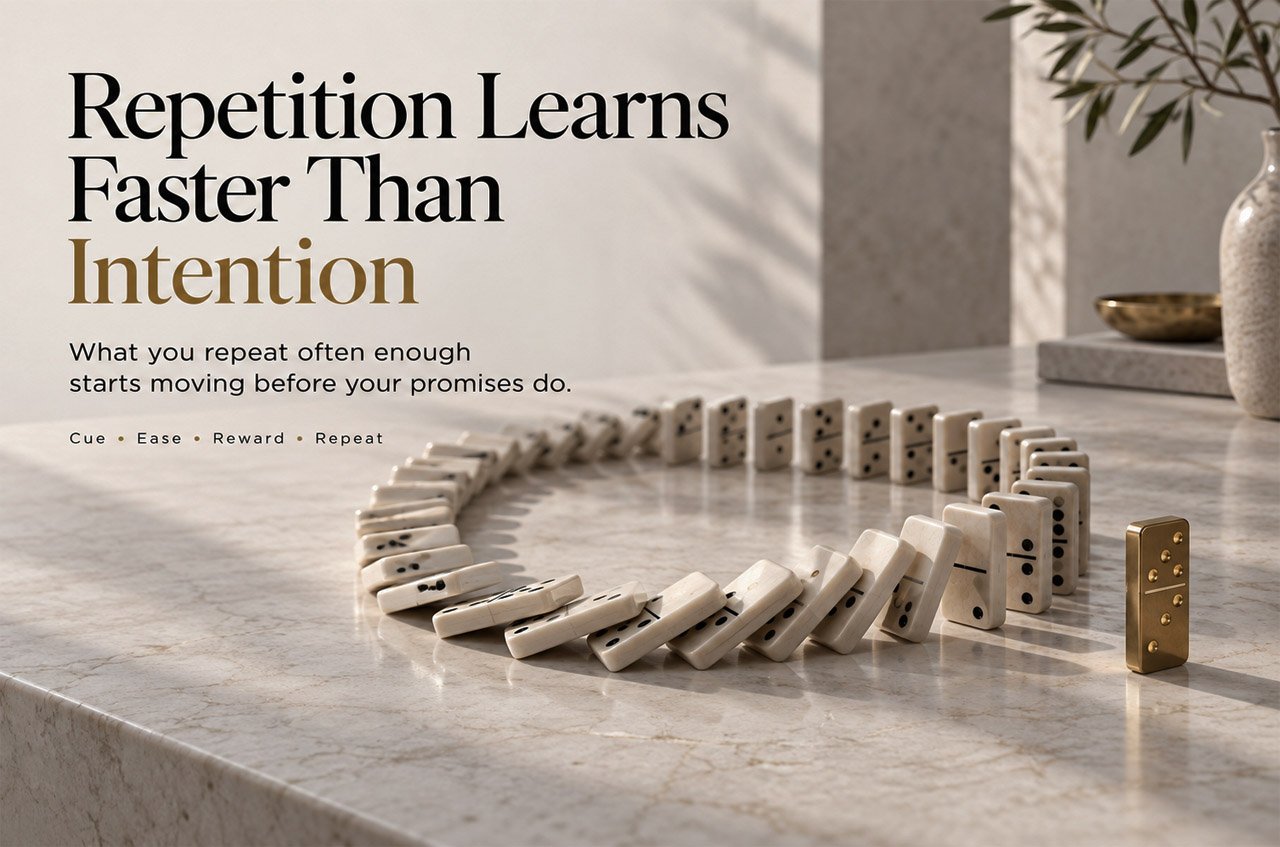
That is why habit can be understood as architecture. Every repetition strengthens a route, every environmental cue makes that route easier to access, and every reduction in friction makes it more likely that we will travel it again. But that architecture can be designed in both directions: add steps, distance, and friction to what you want to reduce; remove steps, decisions, and obstacles from what you want to cultivate. The same tendency that looked like “laziness” yesterday can become an extraordinarily efficient tool when the beneficial behavior is also the easiest one to perform.
Deep change begins, paradoxically, with something almost offensively small. Put on the shoes. Open the document. Read one page. Pour the glass of water. Prepare the desk. The book develops a simple sequence: first train the beginning, then build continuity, and finally allow repeated evidence to reshape identity. Large goals become less intimidating when the daily unit is small enough to begin without negotiation. The brain loves saving effort; fortunately, results know how to accumulate small actions.
That is why environment matters almost as much as intention. Wanting to read while your phone, television, tablet, and half the planet compete for attention from the same room is not exactly a character test; it is a competition you designed to lose with dignity. Preparing cues, reducing steps, and removing friction can give the behavior you want to build a structural advantage. Doing the opposite with what you want to abandon — moving it farther away, adding steps, making access less convenient, and disrupting its automatic cues — uses the same mechanism in the opposite direction.
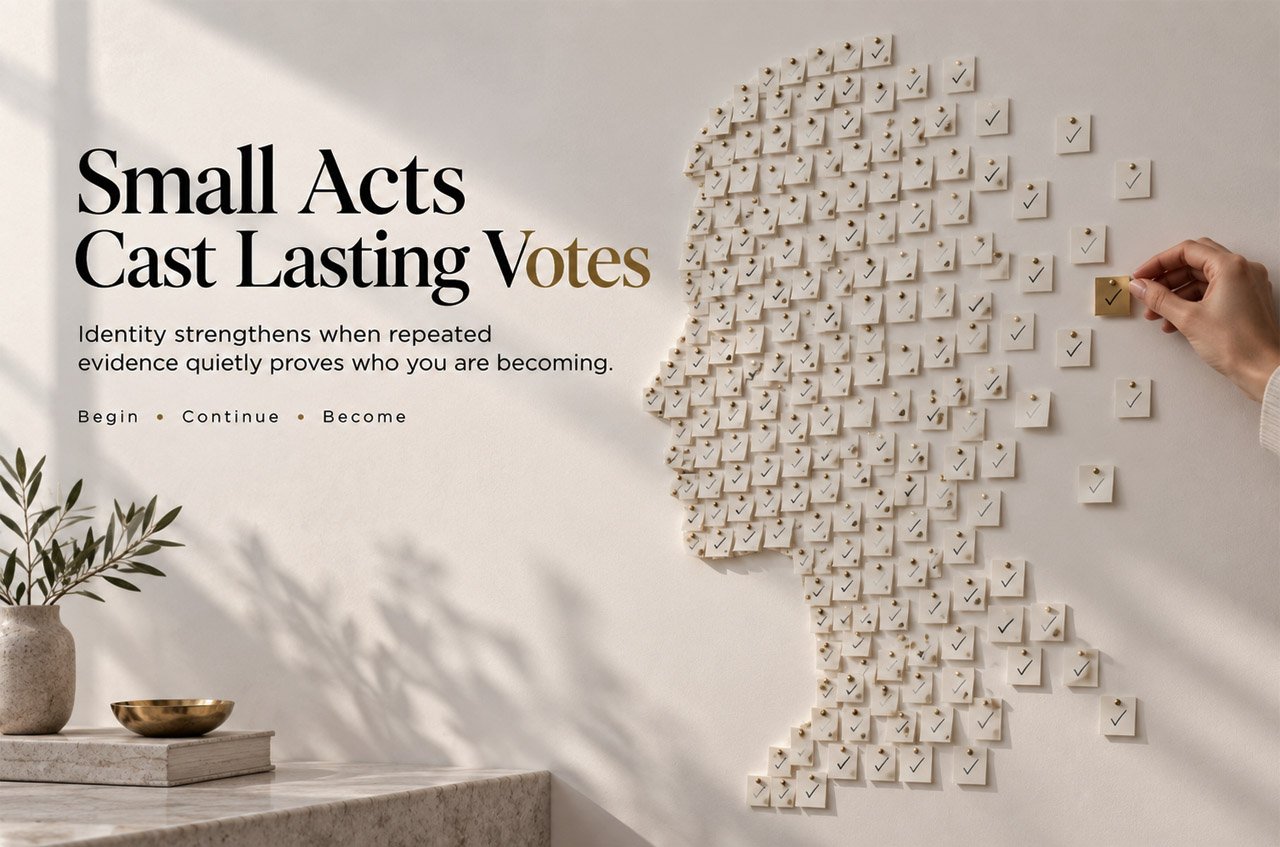
Every small execution also produces something deeper: evidence about who you are. Identity does not change because you repeat “I am disciplined” in the mirror with a convincing expression. It changes when you accumulate enough experiences in which you did what you said you would do. A micro-action may look insignificant from the outside; internally, it functions like a vote. Hundreds of votes eventually create a private reputation, and what once felt like a task begins to feel like a characteristic of the person performing it.
The book, then, does more than teach readers how to build better habits. It explains how to consciously use the mechanisms that reduce effort, automate behavior, and favor familiar routes in order to make destructive patterns harder and productive actions easier. Controlling the beginning, managing friction, using context deliberately, reducing unnecessary decisions, repeating at a sustainable scale, and protecting recovery allows us to build systems that continue working after motivation has left the room.
Because discipline does not always mean forcing yourself to do something difficult every day. Sometimes it means designing the right path so well — and making the wrong one inconvenient enough — that your brain eventually starts helping you do what you once had to convince it to do.
“Your future does not need another promise tonight. It has already learned to distrust speeches. Tomorrow, it will simply watch what you repeat again.”