How the Need for Guarantees Turns Prudence Into Paralysis — and Why Some Certainties Exist Only After You Begin


“Uncertainty is so uncomfortable that some people would rather have the wrong answer than leave the question open.”
We like to say that we want to “be sure” before making a decision. It sounds responsible, prudent, and impressively sensible. The problem begins when being sure stops meaning having enough information and starts meaning eliminating all doubt, risk, anxiety, or possibility of being wrong. At that point, we are no longer simply seeking better data; we are trying to obtain an internal feeling that reality can rarely guarantee before action. Absolute certainty then acquires one remarkable advantage: because it almost never exists, it can postpone a decision for a very long time without ever having to call itself fear.
The human brain is constantly generating predictions. The more familiar a situation is, the easier it becomes to anticipate what is likely to happen; the greater the uncertainty, the more updating the internal model requires. That is why a familiar situation can feel safer even when it is mediocre, painful, or clearly insufficient. Sometimes we do not remain in a job, relationship, routine, or identity because it is good. We stay because we already know the problem’s interior design. Familiarity provides predictability, and the brain can mistake predictability for genuine safety.
The same confusion appears when we try to decide what to do with our lives. Someone choosing a profession will often begin by evaluating their apparent strengths and then searching for the career that seems to match them best. The method looks impeccable until one obvious problem appears: you cannot fully know whether you enjoy something, whether you can develop it, or how far you can go with it without actually practicing it. Part of the information required to choose does not yet exist because only experience can produce it.
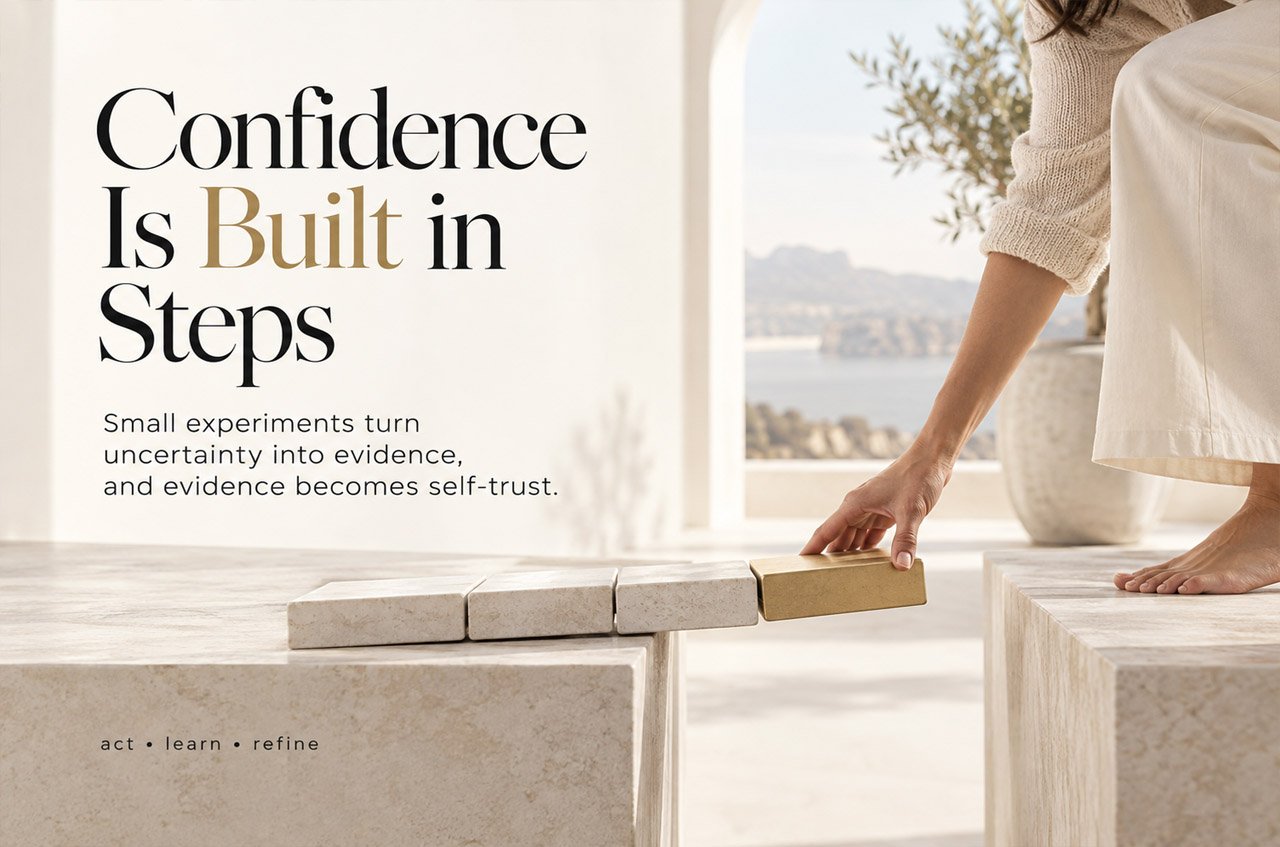
Understanding an activity can generate interest. Performing it creates real information about ability and difficulty. Producing results builds confidence. Showing those results and receiving recognition can strengthen self-confidence. Sustained practice develops competence; competence improves results, confidence, and recognition; and that accumulation may eventually become what we call professional satisfaction. No initial evaluation can contain that entire process because many of the variables we are trying to know emerge only after we begin developing them. Demanding a complete map of certainty before choosing a path is asking experience to deliver its conclusions before it has occurred.
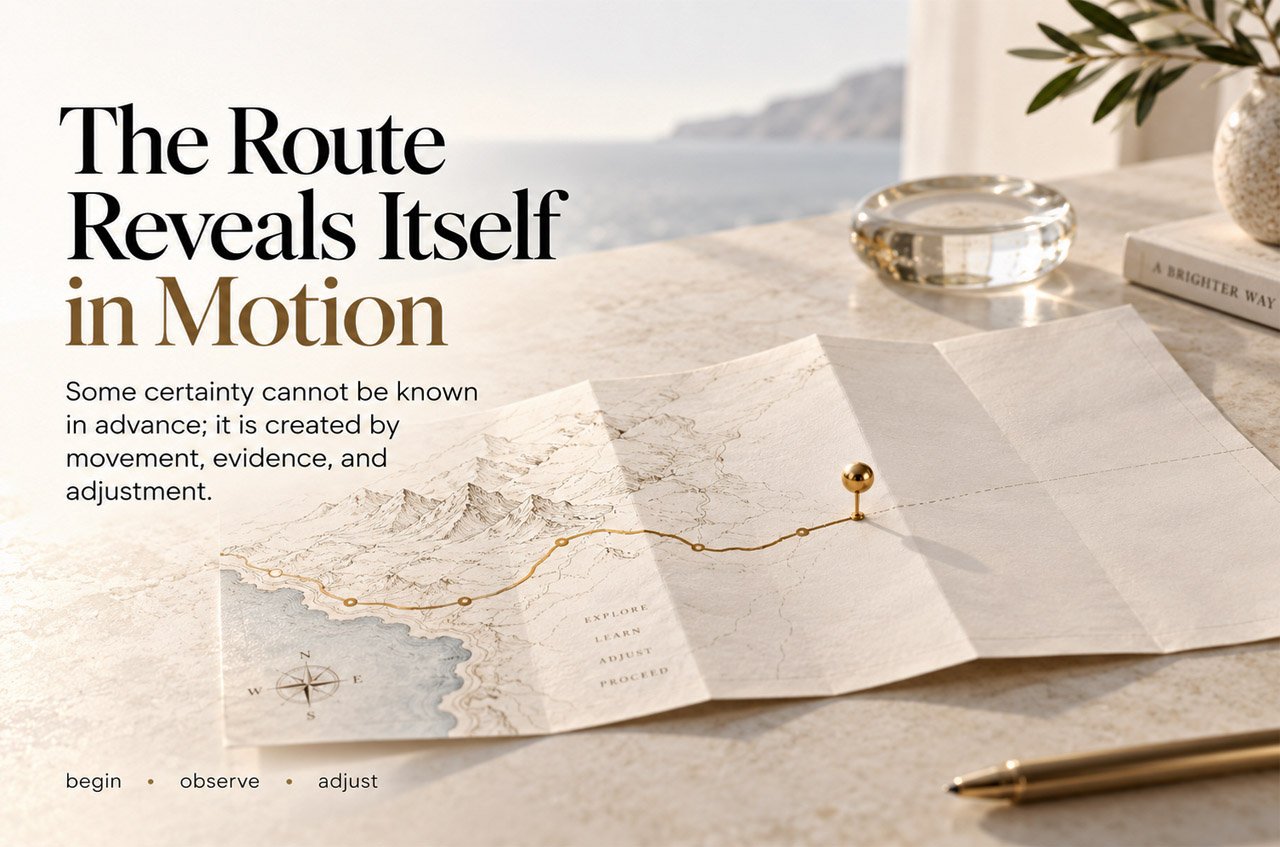
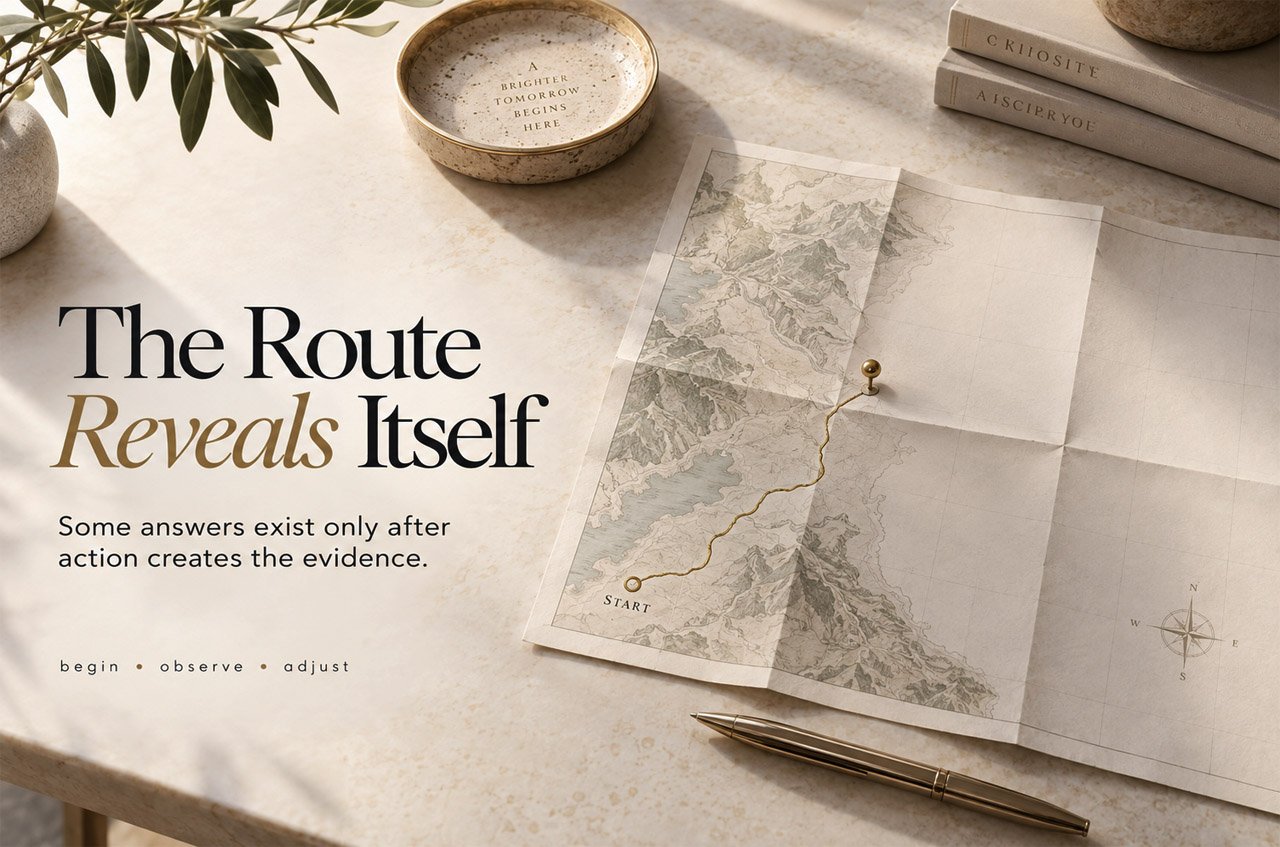
This book establishes a fundamental reversal: useful certainty is built through movement. Action produces data. Data update predictions. Experience separates imagined fears from actual difficulties. Results allow direction to be adjusted. The next action generates better information. It works much like GPS navigation: you do not need every turn before leaving; you need a sufficiently clear starting point, an initial direction, and the ability to recalculate when reality—with its familiar lack of respect for our plans—changes the route.
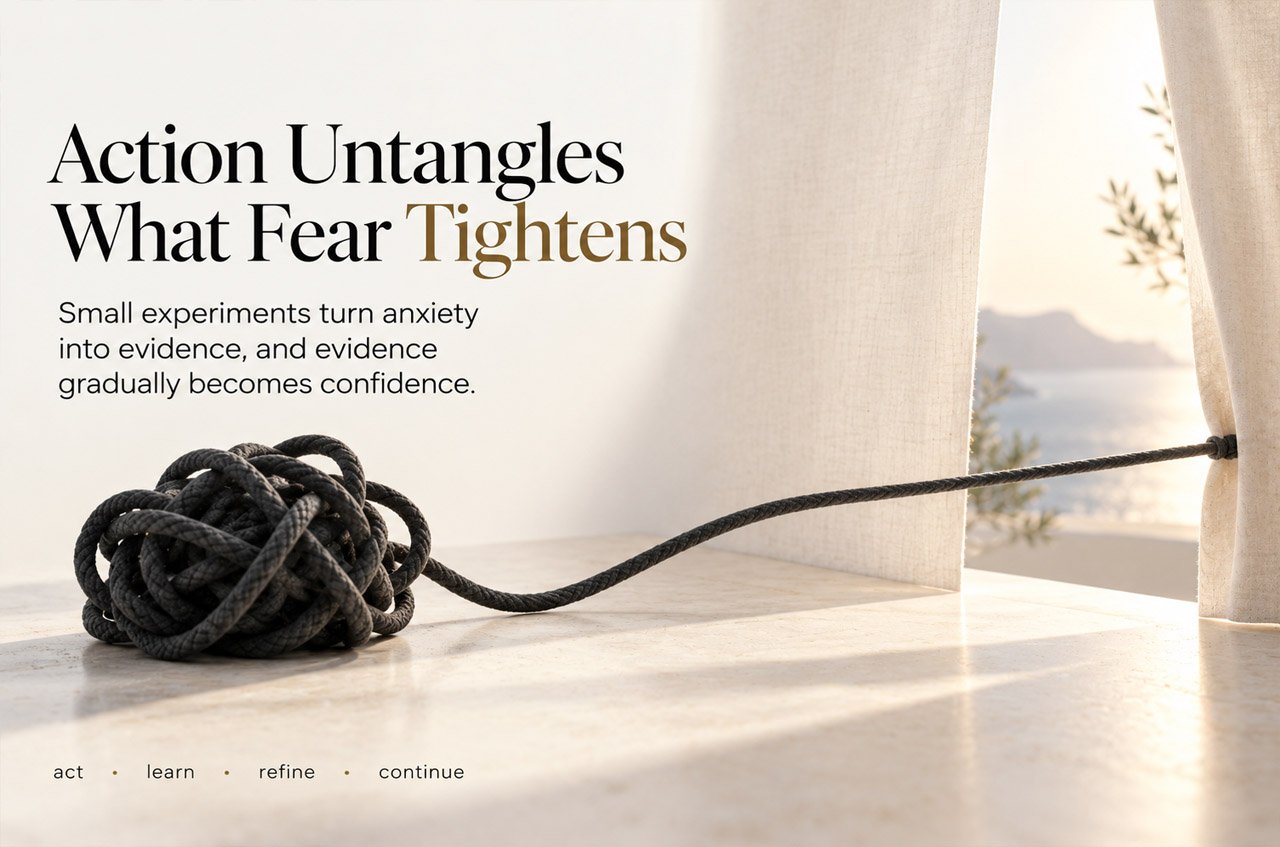
This does not turn every impulse into a wise decision. Some risks require study, some consequences require careful measurement, and some decisions improve substantially with more information beforehand. The essential distinction is between analyzing what can genuinely be known before acting and demanding knowledge that only action can reveal. Readers learn to separate those categories, reduce major decisions into manageable experiments, compare expectations with outcomes, and build confidence through accumulated evidence rather than imagined guarantees.
Uncertainty then stops being a malfunction and becomes an unavoidable condition of any life still capable of changing. Innovation, love, entrepreneurship, learning, changing careers, relocating, telling an important truth, or becoming someone different all require crossing a point where the next page has not yet been written. The goal is not to love uncertainty. It is to develop enough capacity to act intelligently while part of the outcome remains unknown.
“You can wait until you’re completely sure. The only inconvenience is that part of what you need to know is waiting for you to begin before it can exist.”