How Humor Relieves Pain, Lowers Urgency, Shapes What We Accept, and Teaches Us When to Laugh Without Looking Away
“Humor has one extraordinary advantage: it can make you feel considerably better without taking the unnecessary risk of actually improving anything.”
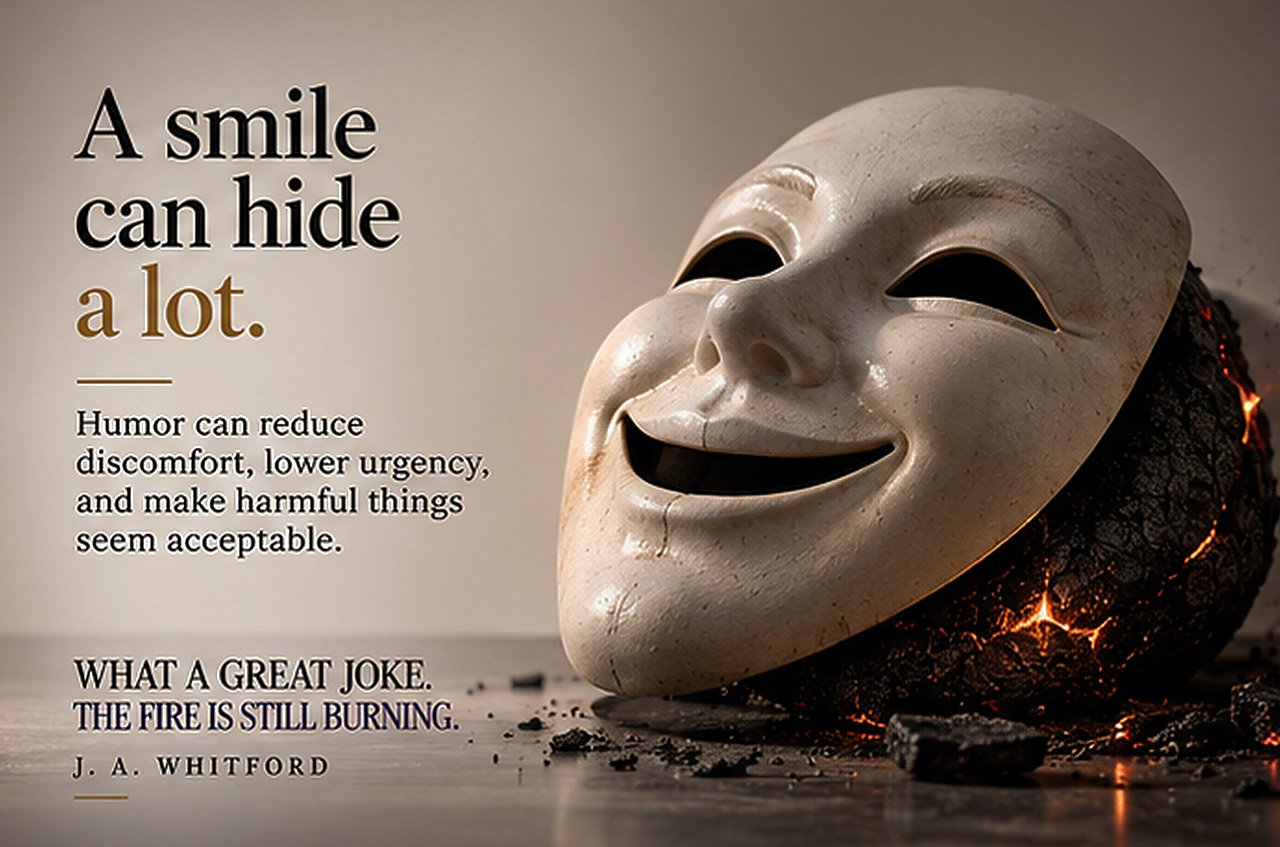
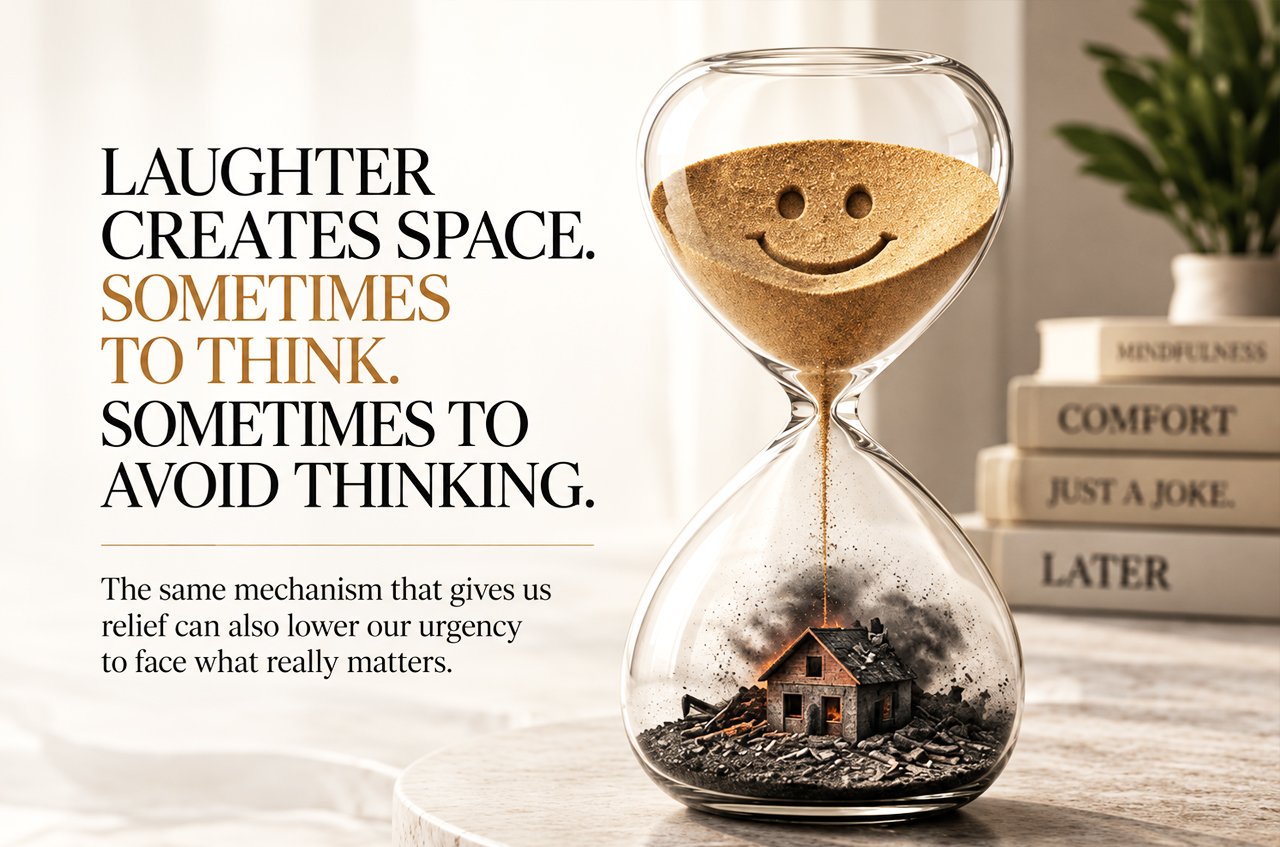
Laughter is one of the most remarkable tools our biology has produced. It lowers tension, connects people, makes difficult experiences more bearable, and gives us room to breathe when reality becomes too heavy. That is precisely why it deserves attention. Anything capable of producing relief so quickly can also alter our sense of urgency before we decide what to do about whatever caused the discomfort in the first place. The problem may remain exactly where it was; we simply begin feeling much better about it.
This book explores that architecture from its foundations: why the brain laughs at incongruities it considers safe enough to tolerate, how humor helps us protect ourselves from emotions we would rather not expose, and how a joke can lower our resistance to ideas we might have examined far more critically had they arrived dressed as serious arguments.
Sometimes humor opens conversations. Other times it opens the door, pours itself a drink, puts its shoes on your white sofa, and lets a disturbing idea walk in. By the time you ask who invited it, it has already chosen a bedroom, changed the curtains, and started offering opinions about how you should live.
That power also operates between people. Bullying, contempt, humiliation, mistreatment, betrayal, and insult acquire a surprising degree of social elegance when someone adds: “It was just a joke.” The sentence is small; the work it performs is formidable. It reduces discomfort, dilutes responsibility, and executes a transfer any experienced manager might envy: the problem stops being the person who humiliated someone and becomes the person who had the terrible manners to feel humiliated.
The aggressor becomes “the funny one”; the person who objects becomes “someone who can’t take a joke.” And naturally, someone eventually announces that “you can’t joke about anything anymore,” as though the real social danger were not the humiliation itself but the alarming possibility that someone might ask the person responsible to take responsibility for it.
Curiously, this passionate defense of humor is always considerably easier when someone else is the one being offended. Humor can make everyone feel better; that does not mean whatever required attention has changed. Sometimes it simply leaves the problem exactly where it was, except now it is surrounded by people laughing.
The same mechanism can turn inward and become even harder to detect. A repeated behavior, once it becomes constant material for humor, can stop feeling like something we do and begin presenting itself as something we are. Someone can be called “the toxic one,” “the dramatic one,” “the financial disaster,” or “the one who always chooses wrong” so often — and with enough charm — that the label begins to acquire social comfort. It no longer describes only a behavior. It starts becoming a character.
And characters have one dangerous advantage: they do not need to improve; they need to remain consistent. If everyone expects “the toxic one” to become jealous again, “the dramatic one” to overreact, or “the financial disaster” to make another bad money decision, repeating the behavior can actually produce recognition, belonging, and another round of laughter. What began as something that perhaps needed correction ends up acquiring an identity, an audience, and sometimes even a small reputation.
Something similar happens when we use humor to narrate our own failures and misfortunes. “I always choose the wrong person.” “My financial life is a disaster.” “I did exactly the same thing again — hilarious.” Laughter can create perspective, reduce shame, and keep every mistake from becoming a personal conviction. All of that can be healthy. The problem begins when every new consequence starts feeling less like information and more like material for the next joke.
Then “you have to laugh at life” can quietly shift from a form of resilience into a highly efficient way of interrupting absolutely nothing. Failure hurts less, the pattern becomes more familiar, and the story gets easier to tell every time. Feeling better helps; feeling better does not mean that whatever required attention has changed.
When that sequence repeats, laughter can begin reinforcing the very thing it seemed to help us tolerate. Shame decreases — which can be healthy — but so can the friction required to correct behavior. Failure stops functioning as information and begins resembling personality. The bad experience loses its ability to teach and gains, instead, excellent prospects for a sequel.
And very few things are more likely to happen again than a bad decision that was never corrected and got excellent laughs the last time.
That same deeply human architecture eventually became extraordinarily profitable. Platforms, creators, advertising, politics, and the attention economy discovered that whatever makes us laugh captures attention, lowers resistance, is easily absorbed, and travels with remarkable efficiency. Serious arguments face a small public-relations problem by comparison: they look long, tedious, complicated, and suspiciously lacking in entertainment value.
They may contain better evidence, more context, and far more important consequences and still be happily ignored while the much friendlier joke has already crossed half the planet and secured permanent residence inside millions of minds. Humor does not need to convince us that something is good. Sometimes it only needs to make it stop feeling serious enough to require a response.
But this book does not end by recommending a more solemn or humorless life. It does something far more useful: it distinguishes relief from anesthesia, humor that processes from humor that avoids, and perspective from disconnection. There are moments when laughter helps us move through an experience; others require the joke to wait while we listen to the doctor, answer the message, make the call, or look directly at what hurts.
Laughing with your eyes open means changing the order: first look, understand, and respond; then, if something is still funny — and almost always something is — laugh freely. The goal is not to lose your sense of humor, but to prevent relief from replacing correction, a funny label from becoming an identity, or a bad decision from finding enough comfort in laughter to repeat itself. Humor works best when it helps us move through reality, not when it persuades us to stop seeing it. And perhaps that is the most important distinction of all: laughing at the fire may make the moment easier; putting it out is still the priority.
“If the problem is still exactly where it was after the laughter ends, perhaps humor did its job perfectly. The uncomfortable question is whether it helped you face the problem… or simply taught you how to live with it.”