How Inherited Beliefs Shape What We Call Good, Right, and Moral
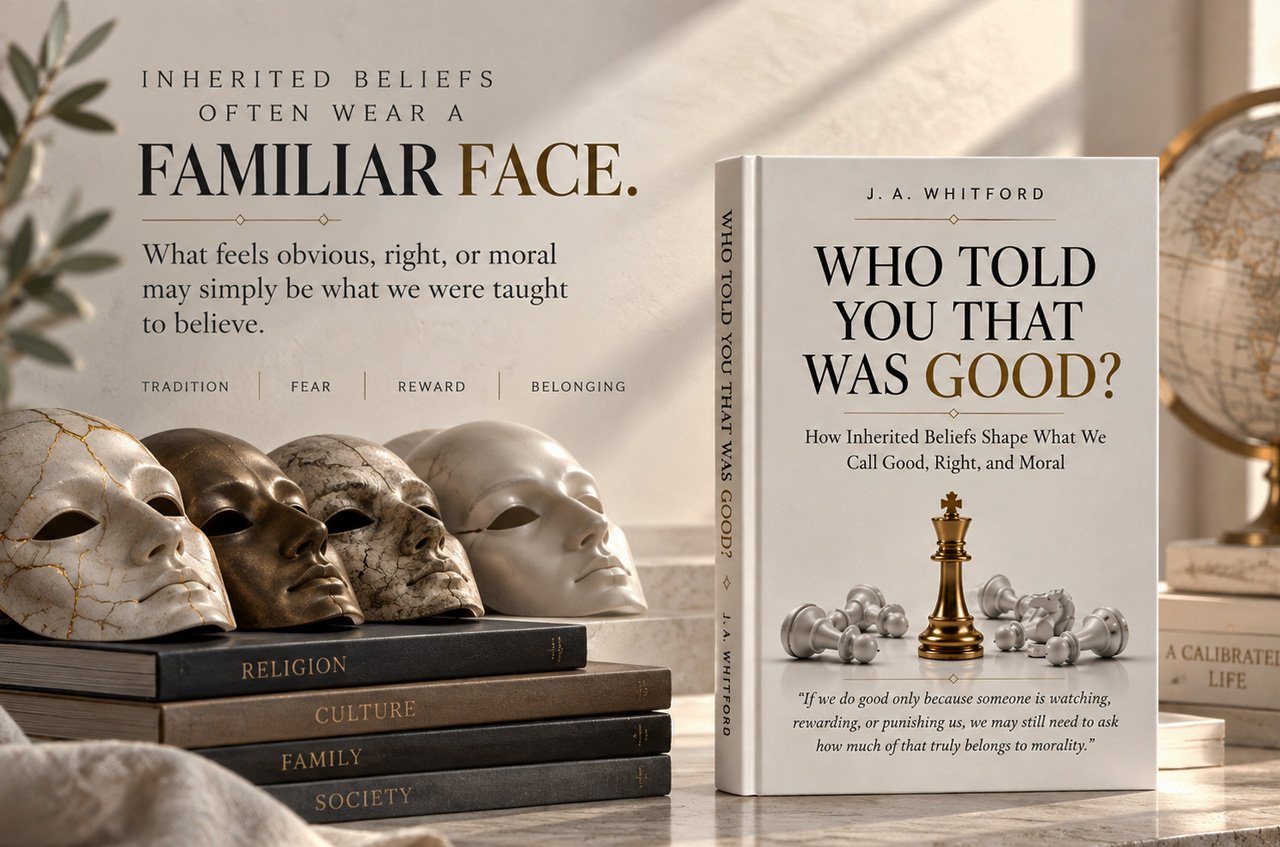
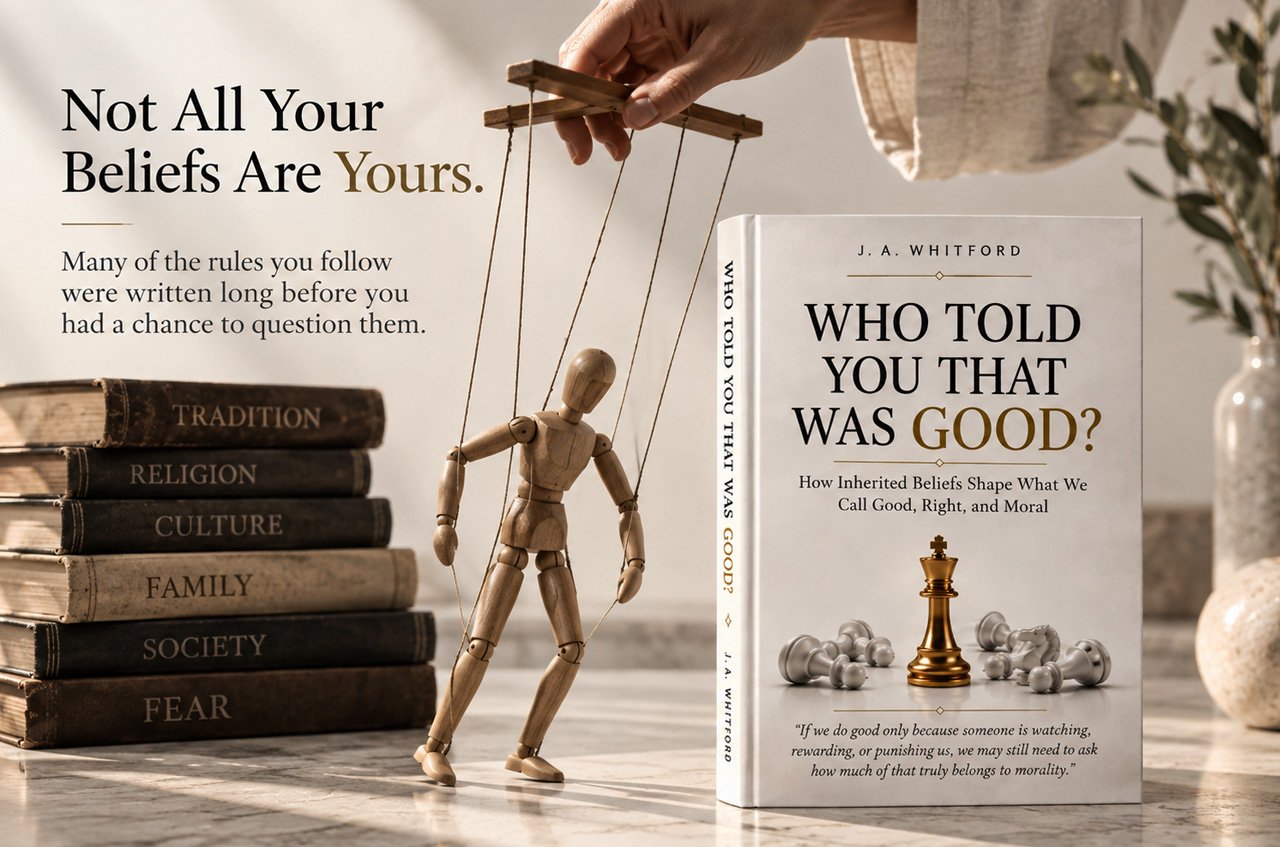
“If we do good only because someone is watching, rewarding, or punishing us, we may still need to ask how much of that truly belongs to morality.”
Long before we were able to decide what was right, stories, prohibitions, virtues, sins, rewards, and consequences had already been organized to explain it for us. Most of us arrived late to that conversation, received the rules already written, and grew up assuming that someone, at some point, had carefully examined the reasons supporting them.
Religion has been one of humanity’s most powerful behavioral architectures. It has created community, cooperation, identity, purpose, boundaries, and comfort; it has also carried rules across centuries long after people forgot what they were originally designed to address, the context in which they emerged, or the problem they were meant to solve.
Things become interesting when a human custom is inherited for so long that it stops feeling inherited and begins to look like an eternal instruction. This book reveals how received beliefs participate in moral formation without turning the conversation into a dispute over whether God exists.
The question is more uncomfortable and, for that very reason, more useful: Which ideas do we still use today to judge, obey, punish, forgive, or feel guilty—and do they still represent the same good they may have been intended to protect when they were first formulated? A rule can be ancient, respected, and profoundly solemn without guaranteeing that its application should remain unchanged centuries later.
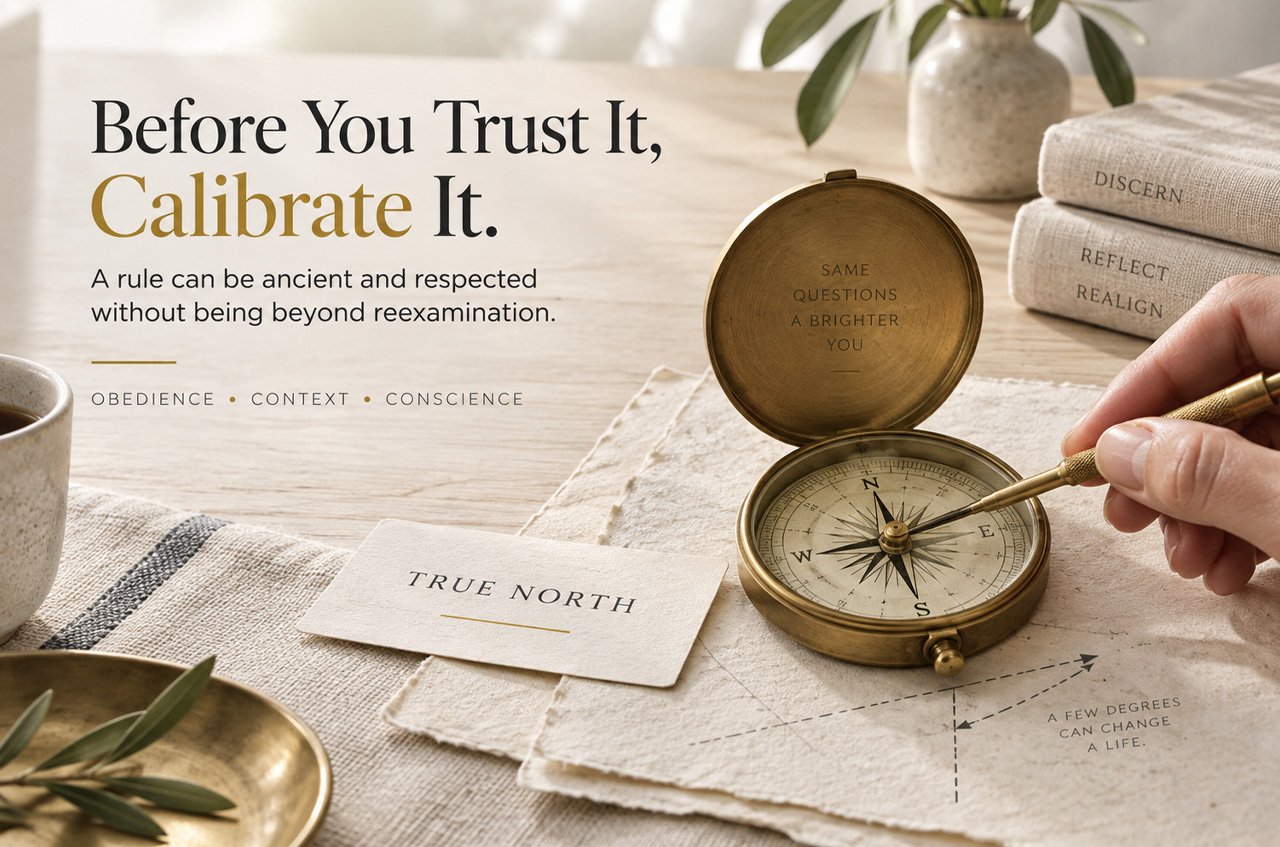
It is like inheriting a compass that everyone in the family has trusted for generations. Everyone insists that it points perfectly north because, after all, it always has. But perhaps no one remembers when it was last calibrated. It may still work with remarkable precision; it may also have drifted a few degrees while everyone marches forward with admirable confidence toward the Caribbean in search of the North Pole.
Readers learn to distinguish personal conviction from conditioning, reward from ethics, and obedience from moral reasoning. The purpose is not to throw away the compass because it is old, but to calibrate it before continuing to walk with so much certainty: preserve what still holds value, reinterpret what requires context, and examine what may have survived mainly because it was never required to answer a serious question.
“The threat of hell can produce obedience; ethics begins when we do what is right even when no one promises to reward us.”