AI INTEGRATION & INTELLIGENT AUTOMATION
J. A. Whitford’s AI Integration & Intelligent Automation service helps organizations identify where artificial intelligence can create practical value and how those capabilities can be incorporated responsibly into existing operations. The objective is not simply to introduce AI tools, but to determine which processes can realistically be assisted, automated, delegated, monitored, or redesigned through intelligent systems.
The process begins with an assessment of workflows, information flows, repetitive activities, decision points, human responsibilities, data availability, security requirements, operational risks, and expected outcomes. Processes are then classified according to the appropriate level of AI involvement—from decision support and employee assistance to automated workflows, specialized agents, or coordinated multi-agent systems.

Potential applications may include document processing, information analysis, knowledge management, customer support, internal assistance, administrative workflows, research, reporting, content processes, operational monitoring, workflow orchestration, data interpretation, repetitive decision support, and other activities where AI can improve speed, consistency, scalability, or access to information.
Technical development and implementation may be supported by AGI INDETECHNO and specialized technology teams. Depending on the project, the architecture may integrate AI models, enterprise data, APIs, software platforms, automation tools, databases, intelligent agents, orchestration layers, security controls, human approval mechanisms, and monitoring systems. Technology is selected around the requirements of the process rather than forcing organizational processes around a particular AI platform.
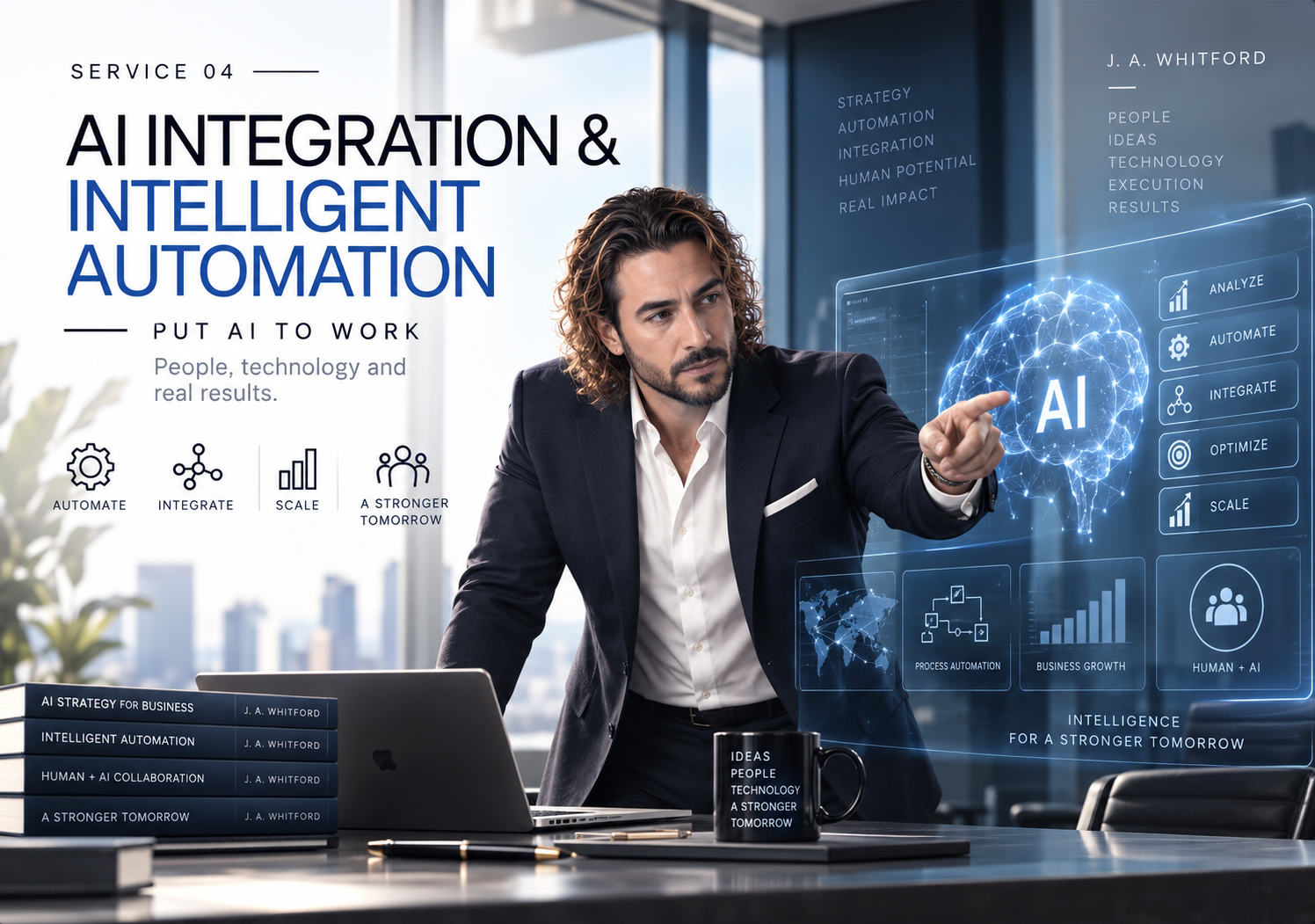
Human supervision, governance, security, accountability, and process control remain essential components of the architecture. Not every activity should be delegated to AI, and different processes require different levels of autonomy. The design therefore defines where AI acts independently, where human approval remains mandatory, what information it may access, how results are validated, and how performance is monitored.
The result is a practical AI implementation strategy connecting technology with genuine organizational objectives. Instead of adopting artificial intelligence because it is available, organizations gain a structured pathway for deploying it where it can improve capability, reduce unnecessary workload, increase consistency, expand operational capacity, and support scalable execution.
REQUEST INFORMATION & SERVICES
Tell us what you need, and we’ll help you identify the right service, next step, or proposal.